Why Machinery Safety and Compliance Matter After the Diferro Explosion
Recent incidents involving Diferro machines have raised serious concerns about calender press explosion risk, especially where sealed oil-filled heated drums are used.
The Health and Safety Executive (HSE) has now issued a product safety report, identifying these machines as presenting a serious risk of explosion and fire. But the deeper lesson for decision-makers is this: these incidents aren’t just about a single product, they’re about systemic gaps in machinery design, functional safety, and the importance of thorough compliance.
If your business purchases, operates, or maintains industrial machinery, understanding this case is essential to preventing similar failures.
What Is a Calender Press Explosion Risk?
A calender press explosion risk refers to the possibility of a sealed, oil-filled heated drum overheating and rupturing under pressure, causing a BLEVE (Boiling Liquid Expanding Vapour Explosion). When control systems fail or secondary safety systems are missing, pressure can build until the drum explodes, releasing a fireball capable of destroying surrounding machinery and structures.
Understanding Sublimation Calender Press Machines and Their Risks
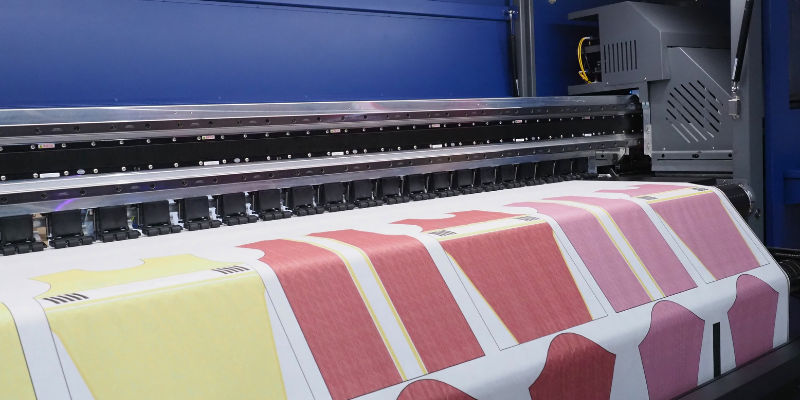
A sublimation calender press is an industrial machine used to transfer designs onto fabrics via heat and pressure. These machines often feature a sealed oil-filled heated drum (roller) which is electrically heated to high temperatures. The process is common in textile manufacturing, printing, and similar industries.
Some models, including the Diferro DP, MP, DM, DE, DR, DX, and DF series, allow for unattended operation, including timer-based preheating and automatic cooling cycles. While convenient, these features can significantly amplify calender press explosion risk if control systems fail.
BLEVE Hazards and the Calender Press Explosion Risk: What Went Wrong
The danger identified in the HSE’s safety alert is a BLEVE, a Boiling Liquid Expanding Vapour Explosion. This occurs when a liquid (such as heat transfer oil) is overheated and contained under pressure in a sealed system, significantly increasing calender press explosion risk.
In both recent Diferro incidents, the machines were left connected to power and unattended, and the temperature control system failed, allowing the oil to overheat. No external heat source was involved. The sealed drum exploded, causing fires and extensive property damage. The built-in Programmable Logic Controller (PLC) failed to prevent overheating. Critically, there was no secondary or independent safety system in place to catch or contain the failure, again demonstrating how quickly calender press explosion risk can escalate.
In a BLEVE scenario, it is important to understand the potential scale of the hazard. Even a small quantity of flammable liquid can produce a massive fireball, for instance, 1 litre of flammable liquid can create a fireball volume of more than 50 cubic meters. Scaling this effect, a single 200-litre drum involved in the Diferro machines could generate a fireball large enough to destroy a factory building measuring around 10,000 cubic meters.This illustrates the extreme destructive potential of a BLEVE and highlights why robust safety controls are critical.
HSE Safety Alert on Calender Press Explosion Risk: Key Compliance Failures
The HSE’s official report (Case No. 2402-0018) outlines several serious compliance failures: lack of secondary safety controls (Safety-Related Control System – SRCS), no SIL (Safety Integrity Level) or Performance Level (PL) classification, breaches of the Supply of Machinery (Safety) Regulations 2008, and a directive that machines must not be used unattended or operated via timer mode. All machines in the affected series should be taken out of service immediately unless emergency measures are implemented.
The HSE instructs users to cease operating these machines until a second, independent Safety-Related Control System (SRCS) has been fitted. This SRCS must be designed, installed, and validated in accordance with BS EN ISO 13849 Parts 1 and 2, the key functional safety standard for machinery.
It is worth emphasizing that a safe design for these machines should have included safety instrumented systems conforming to standards such as EN 13489. These would typically comprise thermocouples or Platinum Resistance Thermometers (PRTs) interlocking directly with the heat source to prevent overheating, as well as suitable passive relief devices like pressure relief valves or burst discs to safely vent excess pressure. The absence of these safeguards contributed significantly to the incidents.
Note: ISO 13849-1 was updated in 2023. While many existing systems may still reference the 2015 edition, decision-makers should ensure that new designs, upgrades, or risk assessments comply with the latest 2023 edition to reflect current best practices and meet regulatory expectations.
Where Risk Assessments Can Fall Short
While most businesses will have conducted risk assessments under frameworks like PUWER and DSEAR, these might not have flagged the risks associated with this machinery and here’s why:
- The oil used isn’t flammable at room temperature, so DSEAR might not initially classify it as hazardous. However, it’s critical to understand that these oils will normally auto-ignite in air at temperatures ranging from approximately 200 to 450°C depending on their specific chemical composition. This auto-ignition characteristic means overheating risks must be evaluated beyond simple flammability classifications.
- PUWER checks may focus on operator hazards, not embedded control system faults or the potential for single-point failures in safety controls. It is important to recognize that PUWER places similar responsibilities on employers as it does on manufacturers in ensuring machinery safety. Employers must ensure control systems are safe and adequately maintained, with fail-safe design principles embedded in machinery operation.
- Without an understanding of SIL/PL and functional safety principles, deeper system design risks can be missed. In other words, even machines that appear compliant on the surface can hide major design-level failures in their control systems or safety architecture.
The Role of Functional Safety: SIL and PL
SIL (Safety Integrity Level) and PL (Performance Level) are standards that measure how well safety functions perform when systems fail. In the case of sealed oil-filled drum presses, a compliant setup should include a primary control system (e.g., PLC), a secondary independent safety system (SRCS) to shut down the machine if temperatures exceed safe thresholds, and routine testing and validation of these systems.
Without this redundancy, as the Diferro case shows, a single point of failure can result in catastrophic damage, even when no operator is present. Ensuring these safety instrumented functions meet the required SIL or PL level (as per EN 61508/61511 or ISO 13849) is critical to reducing the risk of BLEVE and similar hazardous failures.
R&B Industrial’s Perspective: Safe by Design, Compliant by Default
At R&B Industrial, we work across industries where hazardous substances, heat, and pressurised systems are commonplace, from ATEX dust extraction to electrical control and monitoring solutions.
These recent incidents reinforce a message we communicate regularly to clients: compliance shouldn’t be an afterthought; it should be engineered into your systems from day one, especially in machinery where calender press explosion risk exists.
Whether we’re installing SmartAIR® dust control, conducting DSEAR assessments, or designing bespoke extraction and filtration systems, we embed safety standards like BS EN ISO 13849 (2023), PUWER, and COSHH into everything we do. Our focus is on delivering solutions that are fully compliant with the Supply of Machinery (Safety) Regulations 2008, while supporting clients with explosion and chemical aspects of machine safety, including the reduction of calender press explosion risk.
We believe the HSE’s handling of the Diferro incidents has been timely and transparent, but it underscores a deeper need: manufacturers and system integrators must adopt a culture of functional safety, not just minimum compliance.
What Should Decision-Makers Do Now?
If your facility operates any equipment with sealed oil-filled heating systems, or similar unattended thermal processes, take these steps:
- Review your existing machinery risk assessments: do they cover PLC failure and secondary control systems?
- Check for SRCS compliance: is there independent, safety-rated temperature control and pressure relief?
- Review PUWER and DSEAR documentation considering new risks, remembering that PUWER places clear responsibilities on employers to ensure machinery control systems are safe and fail-safe.
- Ensure machines are never left powered and unattended without adequate safety controls.
- Contact a specialist to review your current setup and validate safety instrumented systems according to relevant functional safety standards.
Final Thoughts: Moving Beyond Compliance Toward a Culture of Functional Safety
The explosions caused by Diferro calender presses are a sobering reminder that even the most routine machinery can conceal high-risk failure modes. In many cases, it’s not just the material or the process, it’s the controls, safeguards, and assumptions built into the system that make all the difference.
If your organisation is unsure about the safety or compliance status of your machinery, don’t wait for a safety notice, be proactive.
R&B are experts at applying machine safety to industrial extraction systems, including fire/explosion prevention and protection, chemical hazards and functional safety. We also work with our clients to ensure they are PUWER and DSEAR compliant.
Get in touch today to speak to one of our safety specialists.